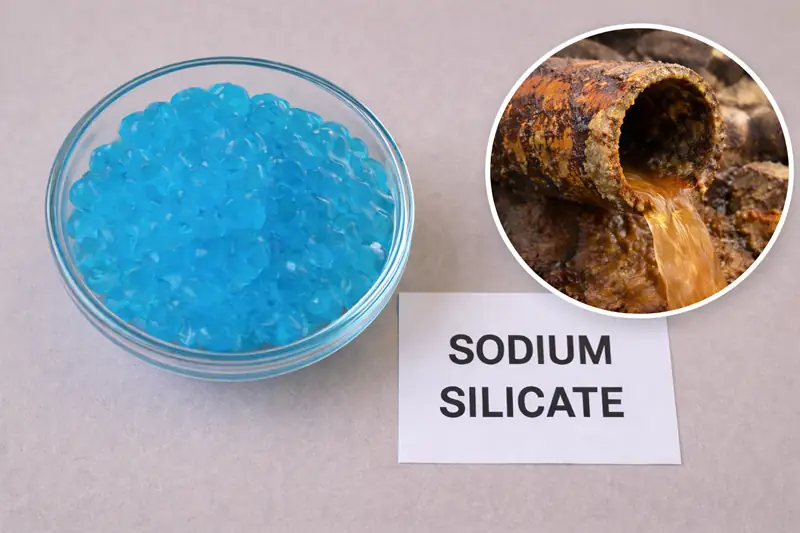

Have you ever experienced your household water or production-line water suddenly turning yellow, developing a metallic taste, or leaving stains on faucets while no one could pinpoint the real cause? Very often, the root of the issue doesn’t start with the “water itself,” but with the path the water travels through the piping system. This is where sodium silicate in water treatment can act like an invisible shield: helping control corrosion, stabilizing iron and manganese, and even improving clarification in certain processes.
If you’re evaluating suppliers, Bavand Chemical Company is one of the sodium silicate manufacturers in Iran.
But the key to success is choosing the right product, dosing it correctly, and monitoring it properly—where the supplier’s experience and technical team can significantly shorten the trial-and-error path.

If you opened this article, you’re probably dealing with one of these concerns:
·Your water is turbid and you’re looking for a way to improve clarity.
·You have corrosion in the distribution network or facilities and are facing metallic taste/color or equipment damage.
·You have high iron/manganese and are seeing discoloration or staining.
·You want to purchase and need to know which grade is more suitable and what questions to ask the seller.
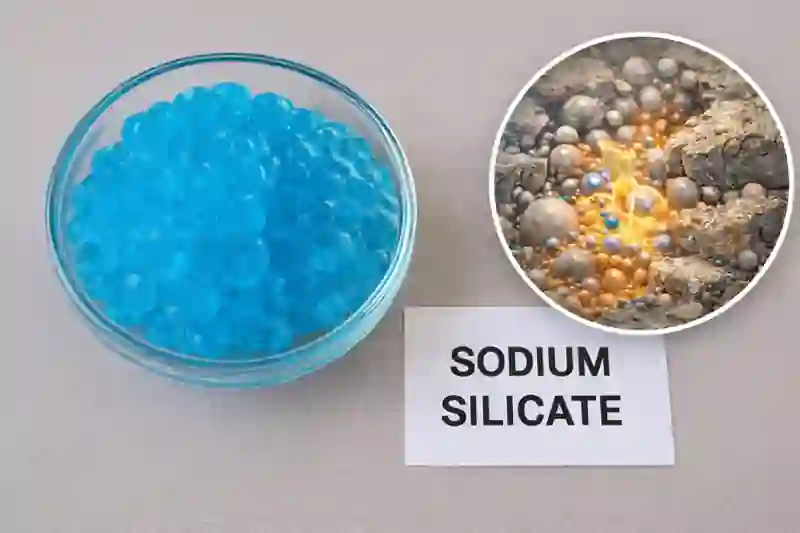
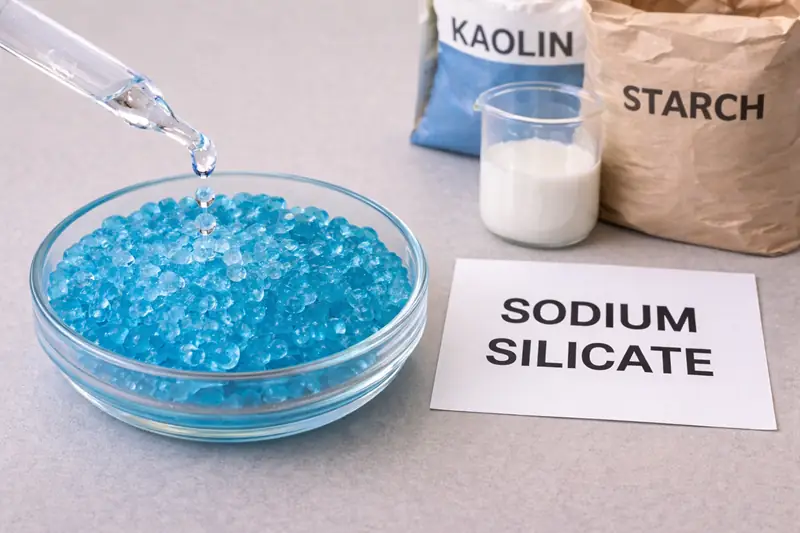
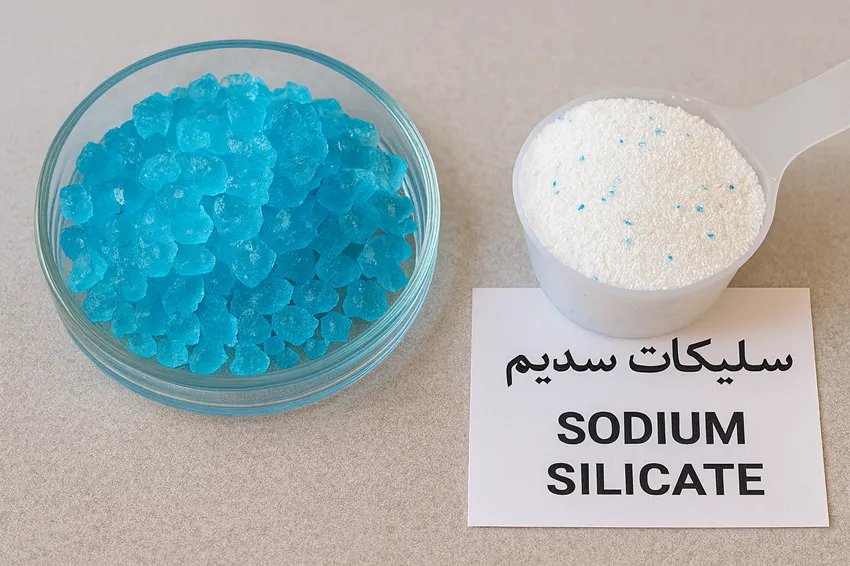
Sodium silicate, commonly known in the market as water glass, is an alkaline compound of sodium and silica. It is typically supplied as a liquid Sodium silicate solution and sometimes as a solid Sodium silicate. Its attractiveness in the water industry is that it can serve multiple functions at the same time:
·Helping form a protective layer on metal surfaces (corrosion control)
·Helping stabilize metal ions such as iron and manganese (reducing yellow/brown water incidents)
·Used as activated silica as a coagulant aid (improving flocculation under certain conditions)
Simply put: when water flows through a network, it interacts with pipe walls. If that interaction isn’t managed properly, the water may become metallic, colored, or turbid. In such cases, sodium silicate in water treatment can be one of your management tools not a miracle and not ineffective; an engineering tool that must be used correctly.
Corrosion in networks and facilities means:
·Reduced lifetime of pipes and equipment
·Increased repair costs
·Higher likelihood of metal release into water (depending on pipe materials)
·More customer complaints about taste/odor/color
With a well-designed program, sodium silicate can help form or strengthen a protective silicate film on metal surfaces. This film behaves like a “defensive layer” and slows down damaging reactions.
Important note: effectiveness is highly dependent on pH, alkalinity, chloride, temperature, contact time, and pipe material. So if someone claims “it works for all waters,” that’s likely an oversimplification.
If iron/manganese are present in water, after oxidation or network changes you may face:
·Yellow or brown water
·Stains on clothing, bathrooms, and equipment
·Sudden turbidity and sediment release after repairs
In this case, sodium silicate in water treatment can help by stabilizing certain iron and manganese compounds (especially oxidized/colloidal forms), helping water resist rapid precipitation and discoloration.
Operational reminder: stabilization does not mean “complete removal.” The goal is to reduce sudden discoloration/precipitation incidents and increase controllability.
A fascinating but less-known use is preparing or using activated silica from sodium silicate—an additive that, alongside the main coagulant (such as aluminum or iron salts), can:
·Create larger flocs
·Improve settling
·Under some conditions, reduce effluent turbidity
This can be especially valuable for waters with unstable turbidity or when raw water quality fluctuates sharply.
For sodium silicate to work properly in water treatment, you need a basic understanding of its mechanism:
·Under suitable conditions, silicates can help form silicate layers on metal surfaces.
·These layers act as a barrier and reduce direct contact between water and metal.
·Regarding iron/manganese, silicate can help stabilize certain metal species so they precipitate later or cause less color.
·In coagulation, activated silica can improve floc behavior and help particle bridging.
Mechanism summary: performance depends on the right balance between water chemistry, dose, injection point, and mixing time.
In real projects, you usually deal with two concepts:
·Initial dose: to create the initial effect or form the protective layer
·Maintenance dose: to maintain stable conditions
Common industry ranges (which must be adjusted through pilot testing and monitoring) are often in the range of a few mg/L expressed as SiO₂, or reported based on the commercial product.
But don’t forget:
The correct dose = the dose confirmed by your monitoring data, not the dose you “heard somewhere.”
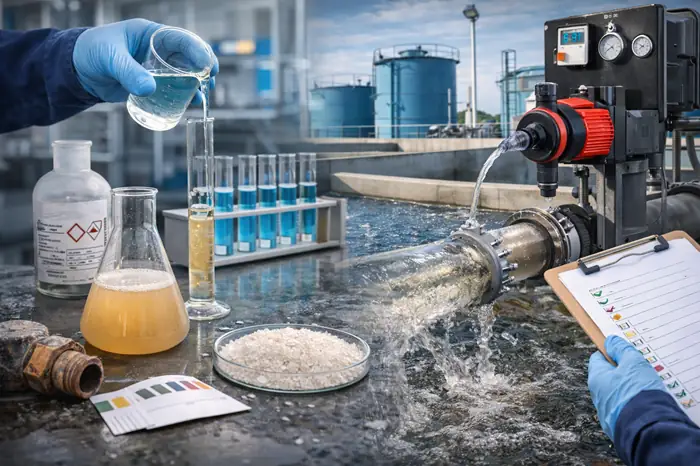
Before finalizing the dose, you should have:
·pH
·Alkalinity
·Hardness
·Chloride and sulfate (corrosivity indicators)
·Iron/manganese (total and dissolved)
·Temperature
·Network material and age
If you purchase from a supplier like Bavand Chemical, ask them to provide the Na₂O/SiO₂ ratio, solids percentage, density, and the Certificate of Analysis (COA)—because without these, accurate dose calculation becomes largely guesswork.
The injection point depends on the objective:
·Corrosion control in the network: near plant outlet or before entering the distribution system
·Iron/manganese stabilization: where oxidation/mixing changes occur and water enters distribution
·Coagulant aid: within the coagulation/flocculation process according to unit design
|
Scenario |
Main Objective |
Suggested Injection Point |
Monitoring KPIs |
Common Mistake |
|
Periodic yellow/brown water |
Stabilize Fe/Mn |
Before entering distribution (after proper mixing) |
Color, turbidity, total/dissolved iron |
Injecting without dissolved-iron monitoring |
|
Metallic taste/color and network corrosion |
Reduce corrosion |
Plant outlet / start of network |
pH, alkalinity, metals, complaints |
Using a fixed dose without pilot testing |
|
High turbidity and weak floc |
Improve clarification |
In coagulation/flocculation zone |
Effluent turbidity, settling time |
Using it as a complete replacement for the main coagulant |
This is a very frequent question and often becomes more commercial in decision-making.
·Multi-functional: corrosion + iron/manganese + coagulation aid (under suitable conditions)
·In some projects, helps improve consumer experience (fewer discoloration incidents)
·Allows staged dosing and better control based on monitoring
·In some waters, other options may be more stable or simpler
·Silicate requires more precise monitoring and design
·If the operations team lacks a monitoring program, results may fluctuate
Professional conclusion: there is no absolute “best.” The right choice is:
Objective + water chemistry + pipe material + operational capability + monitoring plan.
One morning, message after message comes in: “The water has turned yellow!”
Facilities may first blame the storage tank, then chlorination, then even internal plumbing. But with a closer look, it turns out the night before, a main valve in the network was closed and reopened, mobilizing old iron deposits.
In such conditions, if you have an iron/manganese stabilization program, the number of these incidents can be reduced. This is where sodium silicate in water treatment comes in as an engineering solution—not to “clean everything,” but to make the network more controllable.
In practical projects, a key advantage of working with a supplier like Bavand Chemical is that in addition to supplying the chemical, you can rely on guidance for solution preparation, selecting the proper ratio, and a monitoring checklist—something whose value in practice is no less than the chemical itself.
One operations engineer with years of experience in city networks has a simple sentence:
“Good chemical without good monitoring is just a cost; but the right chemical + the right monitoring equals real control.”
This is exactly true for sodium silicate in water treatment: if you don’t have data, you don’t have a decision.
Assume:
·Dissolved iron: about 0.4 mg/L
·Yellow-water incidents: after repairs or flow changes
·Goal: reduce discoloration incidents + mild corrosion control
·pH and alkalinity
·Total and dissolved iron
·Color and turbidity
·Log incidents (date, location, severity)
·One point near the start of the network + one point at the end
·Weekly monitoring and complaint logging (even a simple Excel file)
·Start with a conservative dose
·Increase/decrease stepwise instead of jumping
·At each step, evaluate the effect on KPIs
·If color decreases and parameters remain stable, set a maintenance dose
·If pH or other indicators go out of control, review ratio/dose
Purchasing note: if you plan to source from Bavand Chemical, request detailed technical specifications from the start so your calculations are accurate and repeatable.
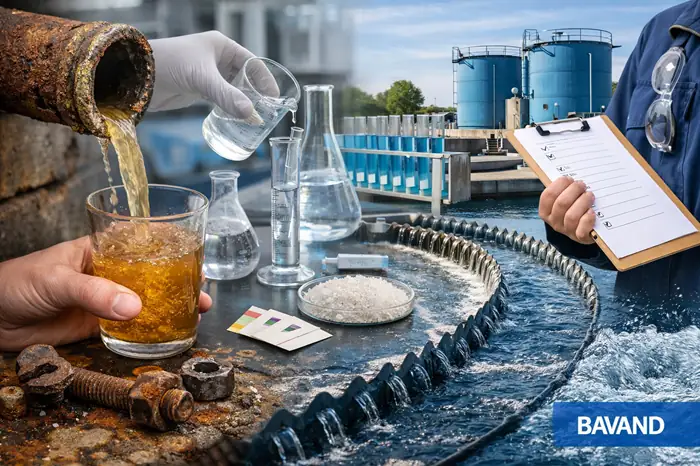
If you want your purchase to deliver results, request these items:
1.Na₂O/SiO₂ ratio (directly affects alkalinity behavior and performance)
2.Solids percentage and density (for accurate dose calculations)
3.COA for each batch (real quality control)
4.SDS and safety/storage/transport instructions
5.Guidance for solution preparation and recommended injection point
6.Compatibility recommendations with other treatment chemicals used
·I clearly defined the objective (corrosion / color / turbidity)
·I have water test data (pH, alkalinity, Fe/Mn, chloride, etc.)
·I purchased a product with full specs and COA (e.g., from Bavand Chemical)
·Injection point and mixing are properly designed
·Monitoring KPIs are defined (color, turbidity, dissolved iron, complaints, etc.)
·Dosing is staged
·Results are documented and the plan is updated
·Measure total and dissolved iron separately
·Check injection point and mixing
·Adjust dose stepwise (not suddenly)
·Check the product’s Na₂O/SiO₂ ratio
·Consult the supplier (e.g., Bavand Chemical) about a more suitable grade/ratio
·Fine-tune the maintenance dose
·Review corrosivity indicators (chloride/alkalinity/hardness)
·Select monitoring points properly (the start of the network isn’t enough; the end is more important)
·Extend the pilot period to clarify network behavior
Sodium silicate in water treatment is an engineering solution: if selected and implemented correctly, it can help control corrosion, reduce color events caused by iron/manganese, and in some processes improve clarification. But if applied without data and monitoring, results may fluctuate and even be misleading.
So the real formula is:
Water analysis → pilot → monitoring → dose adjustment.
If you want me to guide you more precisely, leave a comment below and just write these three items:
1.Approximately what are your water pH and alkalinity?
2.Do you have iron/manganese? (approximate values)
3.What is your main objective for using sodium silicate in water treatment?
And if you intend to purchase, you can request from Bavand Chemical: COA + ratio specs + dosing guide + monitoring checklist so your decision is based not just on price, but on results.