
Have you ever felt that everything looks right in terms of plant nutrition and irrigation schedules, yet at the first wave of heat, salinity, or fungal disease, your plants still collapse?
Now imagine that by adding a clear solution to your irrigation tank or foliar spray, you could strengthen the plant cell walls, increase stress resistance, and improve product quality. This is where potassium silicate comes into play—a compound that companies like Bavand Chemical offer in specialized forms for use in modern agriculture.
In this guide, we are going to look together—clearly, simply, and practically—at:
·What potassium silicate is
·What benefits and mechanisms it has
·How it should be used
·What safety and technical points must be observed
·And what role Bavand Chemical plays in reliably supplying this compound
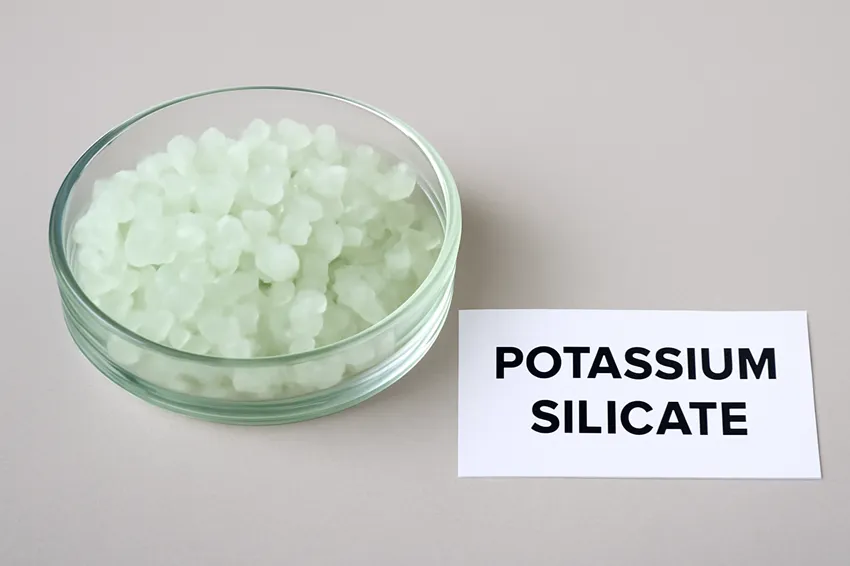
Potassium silicate (Potassium Silicate) is an inorganic compound composed of two main components:
·Potassium (K)
·Silica (Si) in the form of soluble silicate
In agriculture and greenhouse production, this compound is typically supplied and used in two main forms:
oAvailable on the market as a concentrated or diluted liquid solution in various types of packaging.
oVery suitable for use in pressurized irrigation systems, hydroponics, and foliar spraying.
oBecause it is already in liquid form, it is easier for the user to handle and mixes more quickly in water.
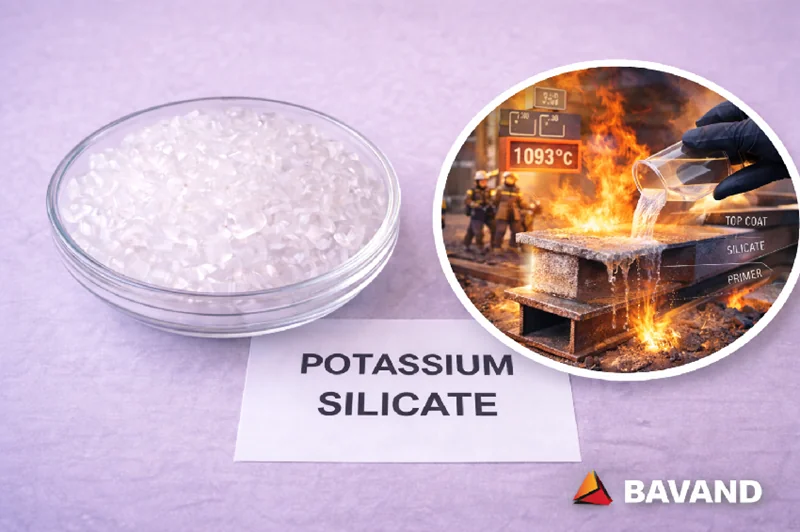
oSupplied as a solid material that is fully water-soluble and must be dissolved in water before use.
oFor those seeking easier transport and storage, it can be a good option, as it generally has less volume and weight than liquid forms.
oIf dissolved properly, it can be used in the same applications as the liquid form (irrigation, foliar spraying, etc.).
The main role of this compound—whether in liquid potassium silicate form or solid potassium silicate form—is mostly as a nutritional–protective compound for the plant:
·On one hand, potassium, as a macronutrient, is involved in water regulation, sugar transport, and many metabolic processes in the plant.
·On the other hand, silica strengthens plant tissues, reinforces cell walls, and increases plant resistance to stresses.
Bavand Chemical, relying on formulation expertise, strives to supply potassium silicate in both liquid and solid water-soluble forms in such a way that, in terms of solution stability, ease of use, and compatibility with various irrigation and spraying systems, it delivers maximum efficiency for farmers and greenhouse growers.
In modern agriculture, it’s not just about growth and greenness. The grower is looking for:
·Products with good external and internal quality
·Longer shelf life after harvest
·Plants that don’t easily give in to heat, drought, salinity, and diseases
·And costs that are optimized as much as possible
Potassium silicate is one of the key tools to achieve these goals because:
1.It provides plant-available silica, which in many soils and water sources is not present in a form that plants can easily use.
2.At the same time, it provides potassium, which is critical for water balance and product quality.
Regular use of potassium silicate can help plants perform more resiliently under conditions such as:
·Heat stress and intense light
·Temporary drought or irregular irrigation
·Moderate salinity in water and soil
Silica accumulates in cell walls and outer tissues of the plant and acts like a physical and physiological shield.
Strengthening the cell wall and thickening the leaf cuticle makes it harder for certain pathogens to penetrate. As a result:
·The rate of spread of some fungal diseases decreases
·The level of damage under infection conditions is reduced
·Overall plant health management is improved, alongside other control methods
By improving tissue firmness and better controlling water balance, potassium silicate can:
·Reduce fruit cracking
·Prevent excessive softening of tissues
·Increase product shelf life in storage and cold rooms
When root systems and plant structure are healthier, uptake and utilization of other nutrients are also optimized. In many nutrition programs, it is recommended to place soluble silica alongside other nutritional compounds to improve overall system performance.
Potassium plays a crucial role in opening and closing stomata. Supplying part of the plant’s potassium through compounds such as potassium silicate helps the plant:
·Perform better under water stress
·Reduce unnecessary transpiration
·And manage water use more efficiently
To decide whether this compound fits your conditions, it is useful to look a bit into the details.
When soluble silica enters the plant via potassium silicate:
·It precipitates in epidermal tissues (surface tissues) and cell walls.
·It causes cell walls to become thicker and stronger.
·It indirectly reduces evaporation from the leaf surface.
Simply put, the plant becomes less delicate and fragile and gains greater capacity to withstand stress.
The potassium present in potassium silicate:
·Plays a role in transporting sugars and energy-rich compounds within the plant.
·Helps regulate osmotic pressure of cells and maintain tissue turgor and freshness.
·Has a positive effect on the color, taste, and size of fruits.
Combining these two elements in a single product means potassium silicate simultaneously plays both a nutritional role and a structural–protective role.
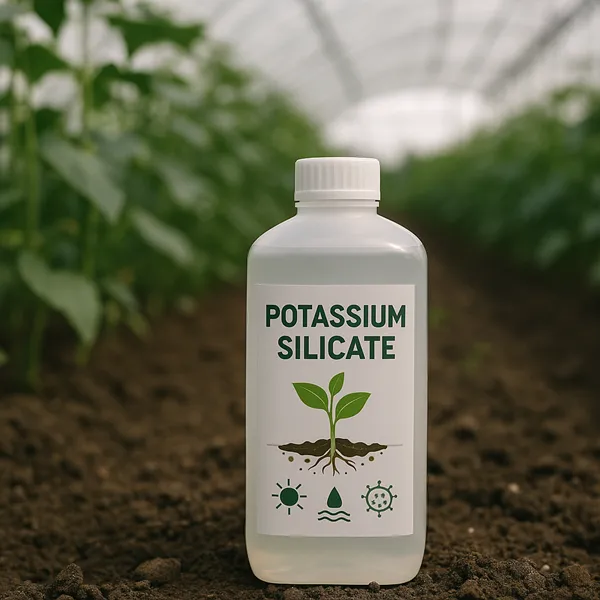
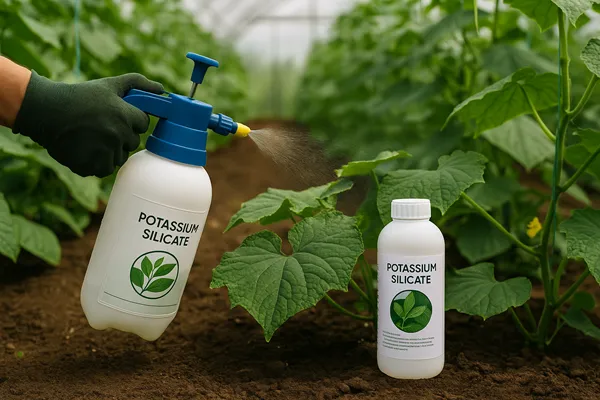
In many greenhouses and orchards, potassium silicate is used as a foliar spray:
·Advantages:
oRelatively rapid absorption through the leaves
oFormation of a protective layer on the leaf surface
oSuitable for conditions where the root system has problems or where soil conditions are limiting
·Common applications:
o Greenhouse cucumber, tomato, and pepper
oGrape, apple, and citrus orchards
oOrnamental plants sensitive to stress and disease
Formulated products from Bavand Chemical are usually designed so that, at recommended concentrations, the risk of leaf burn is minimized—provided that the correct dose and timing of foliar spraying are observed.
🔎 General recommendation:
Carry out foliar spraying during the cooler hours of the day (early morning or late afternoon), and avoid using solutions that are too concentrated or mixtures that have not been pre-tested.
In pressurized irrigation systems, especially in greenhouses, potassium silicate is usually added to the nutrient solution tank:
· Allows uniform distribution around the root zone
·Can be combined with other solutions (if chemically compatible)
·Suitable for establishing a regular nutritional and protective program
In standard industrial products produced by Bavand Chemical, particular attention is paid to factors such as:
·Stability of the solution in the tank
·No sediment formation in lines and pipes
·Compatibility with different irrigation systems
so that use is easier and more reliable for the user.
In hydroponic cultivation where the plant is completely dependent on the nutrient solution, using potassium silicate can:
·Play an important role in tissue strength and reducing physiological disorders
· Help provide a more balanced solution for the plant alongside other elements
However, in soilless systems, controlling pH and solution concentration is more critical; therefore, selecting a standard product is recommended.
The table below compares several silicate-based compounds in terms of their agricultural applications:
|
Feature / Compound |
Potassium Silicate Solution (Agricultural) |
Industrial Potassium Silicate Powder |
Insoluble Silica (Mineral Powder) |
|
|
Solubility in water |
Very good |
Depends on quality and purity |
Very good |
Very low |
|
Plant-available potassium |
Yes |
Yes |
No |
No |
|
Amount of plant-available silica |
High |
Medium to high (relatively) |
High (but with high sodium) |
Very low |
|
Suitable for regular use on plants |
Yes, with proper formulation |
With caution, depending on purity |
Generally not recommended (high Na) |
Usually not sufficient on its own |
|
Control of solution pH |
Alkaline but manageable |
Alkaline |
Strongly alkaline |
No significant effect |
|
Common application |
Foliar spray, irrigation systems, hydroponic |
Some specific uses |
Mainly industrial, not direct on plants |
Physical soil amendment, not solution nutrition |
In many agricultural projects, choosing an agricultural-grade potassium silicate solution, especially from specialized brands such as Bavand Chemical, is preferred due to ease of use and predictable behavior in solution.
Important: The values below are only common examples. Always follow the instructions of the specific product and the recommendations of a specialist.
·General range:
oAbout 1 to 3 milliliters per liter of water for orchard and greenhouse crops
·Suggested timings:
oDuring the plant’s vegetative growth period
oAt the beginning of fruit set
oBefore entering periods of stress (intense heat, salinity, common seasonal diseases)
·General range:
oAbout 2 to 5 liters per hectare (based on a standard concentrated solution) per application
·Frequency:
oOften every 7 to 14 days during critical growth stages
·Mixing test
Before mixing potassium silicate with any other solution, mix a small amount of them in a separate container to ensure there is no significant sediment formation or severe cloudiness.
·pH control
Since this compound is usually alkaline, it is better to measure the final pH of the solution after it has been added to the tank—especially in hydroponic systems.
· Spacing from solutions containing concentrated calcium and magnesium
In some cases, simultaneous application with certain solutions can cause sediment. In Bavand Chemical product brochures, there is usually a compatibility chart and recommended order of addition.
·Due to its alkaline nature, it is better to use gloves and safety glasses when working with concentrated potassium silicate solutions.
·Avoid direct contact with eyes and sensitive skin; in case of contact, rinse thoroughly with plenty of water.
·Store in a cool place, away from direct sunlight and out of reach of children.
·After each use, close the container tightly to prevent moisture ingress, contamination, and quality changes.
·In standard products supplied by companies such as Bavand Chemical, detailed information on storage conditions, pH, density, and production and expiry dates is printed on the label; reading and following this information is essential.
When using specialized compounds like potassium silicate, it is not only the substance itself that matters; formulation quality, raw material purity, solution stability, and technical support are also very important.
Bavand Chemical, as a company active in the production and supply of chemical and nutritional compounds for agriculture and industry:
·Focuses on stable and user-friendly formulations
·Strives to design potassium-silicate-based products so that they:
oDissolve well in water
oDo not create sediment in irrigation systems
oAre compatible with many nutritional solutions
One of the advantages of working with brands like Bavand Chemical is that:
·In addition to access to the product, you can benefit from the advice of technical experts.
·Detailed technical information—such as analysis, pH, usage recommendations for different crops, and compatibility charts—is provided transparently to the user.
Let’s assume a greenhouse grower in a warm region has a 3,000-square-meter cucumber greenhouse and faces the following issues every year:
·Leaf edge burn in summer
·Sunscald on fruits
·Increased fungal diseases under high humidity
The grower consults with one of the technical experts at Bavand Chemical. After evaluating the conditions:
·Irrigation water quality
·Greenhouse ventilation status
·Current nutrition program
the specialist suggests that a potassium-silicate-based product from this company be included in the program as:
·Periodic foliar sprays on the leaves
·Regular addition to the irrigation solution during sensitive periods
·Every 10 to 14 days, foliar spraying is carried out at the recommended concentration.
·In the irrigation tank, at specified intervals, a certain amount of potassium silicate solution is added.
After a few weeks:
·Leaf thickness and strength have improved.
·The severity of burn symptoms and heat-stress-related lesions has decreased.
·Cucumbers have a more uniform appearance and better shelf life.
·Total costs related to stress and disease management, compared to the previous season, have gone down.
This example shows that when potassium silicate is used alongside proper greenhouse management and expert consultation, it can have a clearly noticeable impact on performance.
If we wanted to summarize everything in a few sentences:
·Potassium silicate is a dual-function compound: it serves both as a source of potassium and as a source of plant-available silica.
·Proper use of it helps plants:
oBehave more resiliently against heat, drought, salinity, and diseases
oAchieve better product quality (appearance, firmness, shelf life)
oAnd overall, make the production system more stable and economical
· Choosing a reliable supplier such as Bavand Chemical ensures that:
oYou can be confident in the quality and consistency of the product
oAnd, when you need guidance, you have access to a specialist technical team