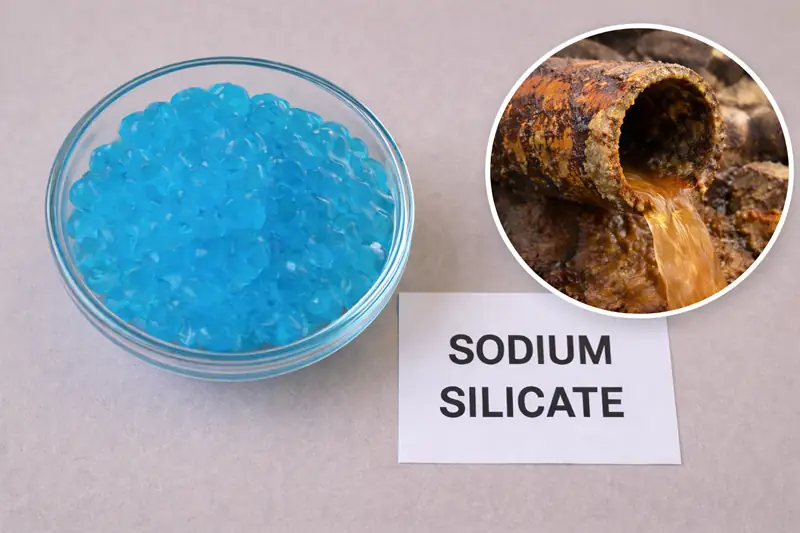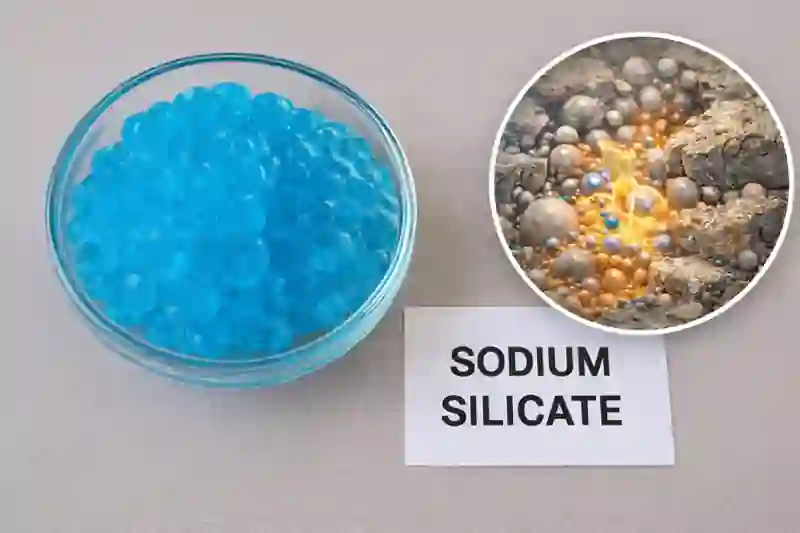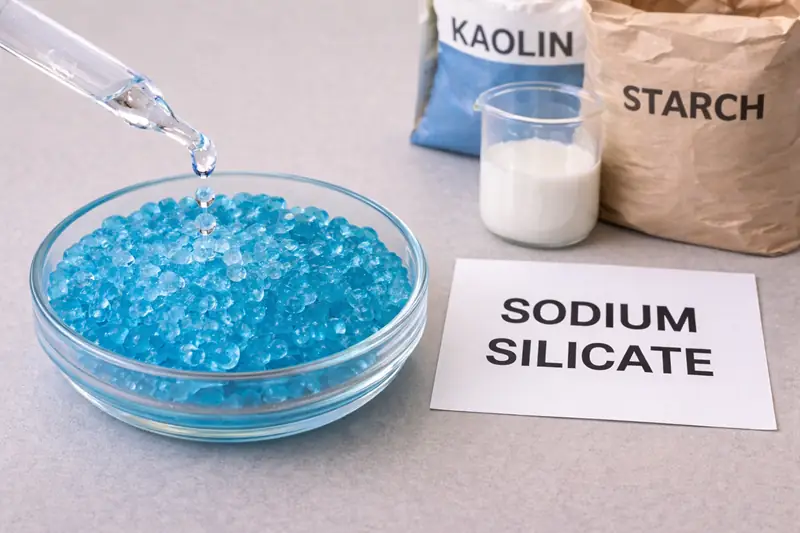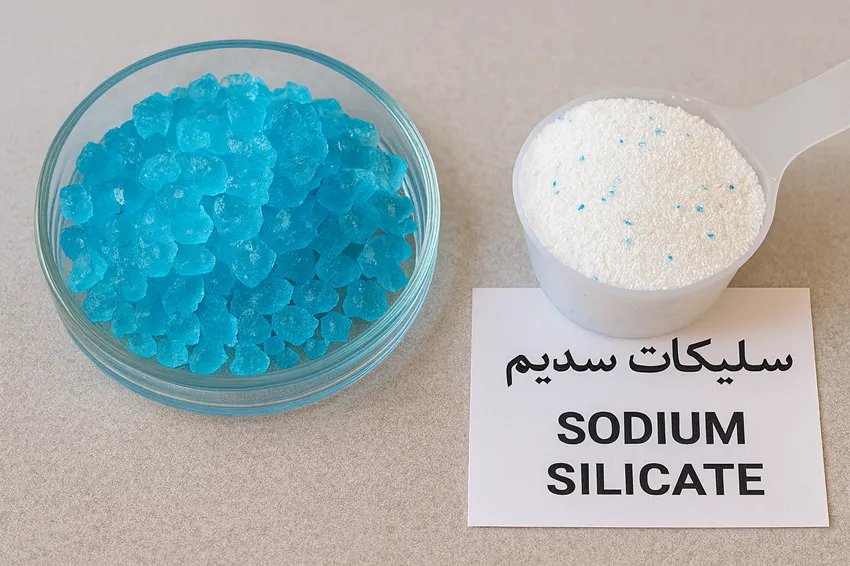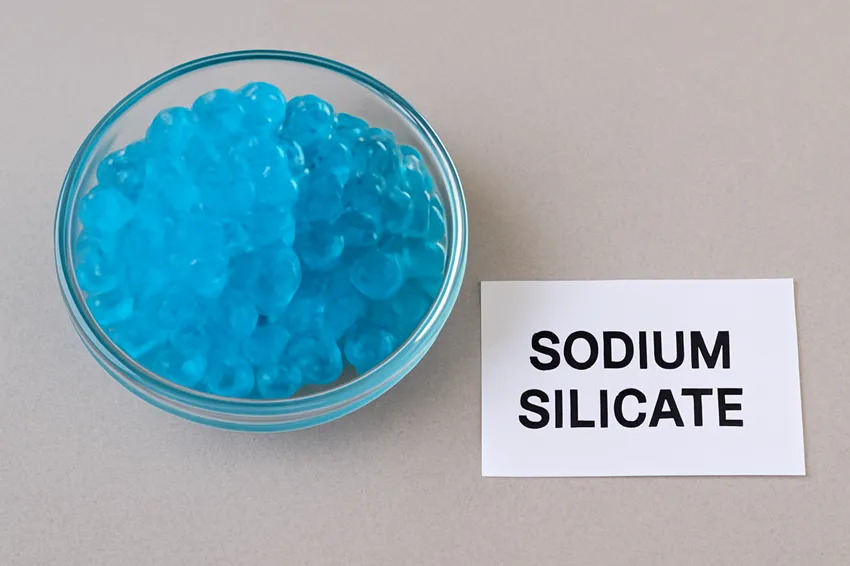
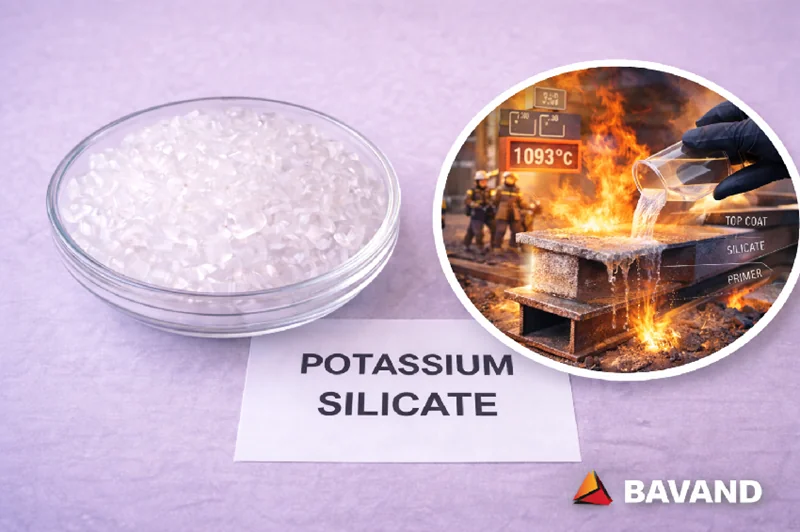

Are you interested in learning what sodium silicate is and how it can revolutionize various industries? This key chemical, also known as "water glass," plays a crucial role in many industries, such as glassmaking, detergents, construction, and even agriculture. The global market for this compound is expected to exceed $6.8 billion by 2029. If you are looking to improve the quality of your industrial products using sodium silicate, Bavand Chemistry, as a manufacturer of sodium silicate in Iran, is here to provide you with the best varieties of this substance. In this guide, you will become familiar with the characteristics, types, and applications of sodium silicate.

Sodium silicate (Na₂O·nSiO₂) is a widely used chemical compound found in numerous industries and research projects. Its unique properties include excellent heat resistance, high stability against acids, water repellency, and strong cleaning power. These features make sodium silicate a key ingredient in many industrial products, from detergents to construction mortars.
Sodium silicate is a crucial raw material in the industry, available in both solid and liquid forms. Depending on the molar ratio of SiO₂ to Na₂O (modulus), it can exhibit different characteristics such as viscosity and thermal stability, which can be adjusted to suit various applications.
Sodium silicate is available in two forms: liquid and solid, each with its specific properties.
Liquid sodium silicate is an alkaline solution that is easily available and ready for use. It has the following characteristics:
Solid sodium silicate comes in the form of powder, flakes, or granules, making it easy to create a solution on-site. Its advantages include:
Lower transportation costs: No excess water content.
Formulation flexibility: More precise control over solid percentage and modulus.
Higher stability: Due to proper packaging and easy storage.
|
Feature |
Liquid Sodium Silicate |
Solid Sodium Silicate |
|
Transportation |
Bulkier, higher shipping costs |
Lighter, lower shipping costs per ton |
|
Formulation Flexibility |
Fixed modulus and solid percentage |
Modulus and solid percentage adjustable on-site |
|
Storage |
Sensitive to freezing and evaporation (requires dry storage and covering) |
Sensitive to moisture (needs completely dry packaging) |
|
Usage Setup |
Ready to use, no dissolution required |
Requires dissolution equipment (tank, mixer, heating) |
|
Modulus Control |
Limited (factory-set modulus) |
High and adjustable on-site |
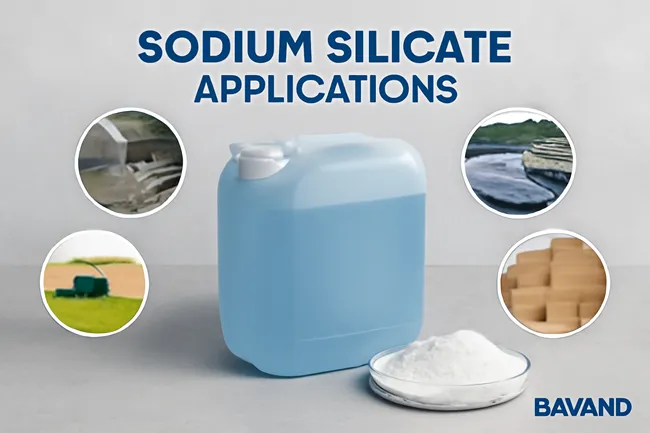
Below is a table explaining the applications and benefits of sodium silicate in different industries. This helps readers understand why this chemical is widely used in each sector.
|
Industry |
Applications |
Benefits |
|
Detergent and Cleaner Industry |
- Used in detergent formulations like laundry and dishwashing powders |
- Enhances detergent effectiveness |
|
Paper and Packaging Industry |
- Used as a binder and filler in paper and cardboard production |
- Improves paper product quality |
|
Ceramic, Tile, and Porcelain Industry |
- Used as a binder and stabilizer in tile and ceramic production |
- Reduces material waste |
|
Metals Smelting and Casting Industry |
- Used as a binder in casting molds and metal coating |
- Enhances mold strength |
|
Construction Industry |
- Used as a strengthening and water-proofing additive in cement and concrete |
- Increases concrete strength |
|
Agriculture |
- Used as a fertilizer and plant enhancer |
- Increases agricultural productivity |
|
Food Industry |
- Prevents powder clumping and aggregation in dry products |
- Increases shelf life and quality of food products |
|
Water and Wastewater Treatment |
- Used as a coagulant and flocculant in water and wastewater treatment |
- Improves water quality |
|
Asbestos Cement Production |
- Used as a binder and stabilizer in asbestos cement roof production |
- Increases the strength and durability of cement products |
|
Oil and Gas Drilling Industry |
- Used as a stabilizer for wellbore walls and improves drilling fluid lubrication |
- Increases drilling efficiency |
|
Conveyor Belt Industry |
- Used as an anti-abrasive and anti-corrosion agent to increase conveyor belt resistance |
- Increases conveyor belt lifespan |
|
Cement and Concrete Production |
- Used as an additive to improve concrete strength in dam construction and civil engineering projects |
- Enhances durability and strength of concrete under harsh conditions |
This table comprehensively combines the applications and benefits of sodium silicate across various industries, helping readers easily make optimal choices for their processes.
Sodium silicate is a chemical additive that plays a vital role in many industries. It can make concrete stronger, detergents more effective, and adhesives more durable. With its wide-ranging applications and high value in industrial processes, understanding its features and how to select it can boost productivity in your operations.
If you want to take advantage of sodium silicate in your industrial processes, contact BAVAND CHEMICAL experts today for a free consultation. Also, feel free to share your thoughts on the application of sodium silicate with us.