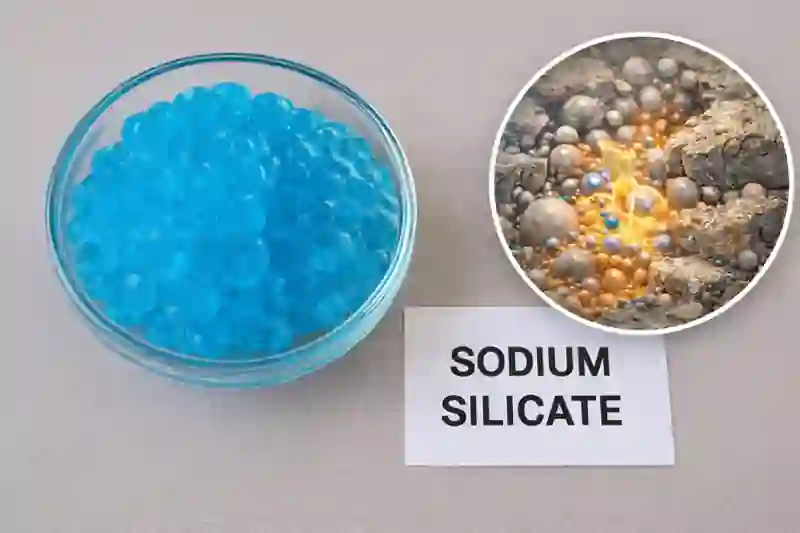

Have you ever seen a structure that looks solid, but after a few years develops water ingress, fine cracking, and façade bulging/delamination? On the other hand, you’ve probably also seen projects where—after many years—the concrete is still sound, the industrial floor stays dust-free, and mortars haven’t crumbled. One important difference between these two scenarios is the smart (or careless) use of sodium silicate in construction (cement, concrete, and mortar)—and choosing the right supplier of construction chemicals.
In this article, without annoying complexity and in a completely simple, practical language, we explain what sodium silicate does in cement, concrete, and mortar; where it is used; what risks it has; and how you can use it intelligently in your projects. To make the discussion more tangible and familiar with the real domestic market, in some parts we refer to products available in Iran; we mention Bavand Chemical Company is one of the sodium silicate manufacturers in Iran as one local supplier of construction chemical products, so the path of sourcing and applying these materials becomes clearer and more practical.
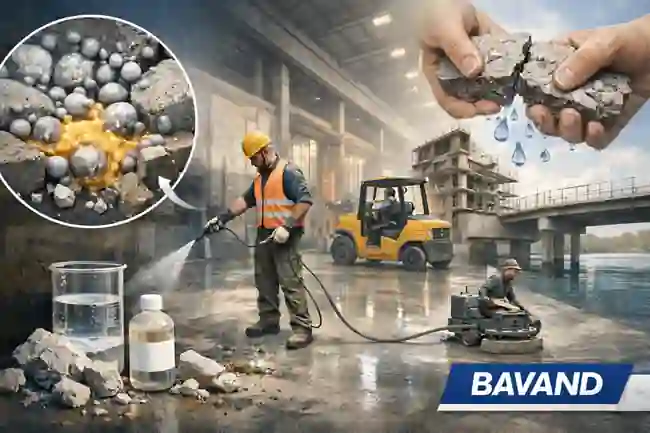
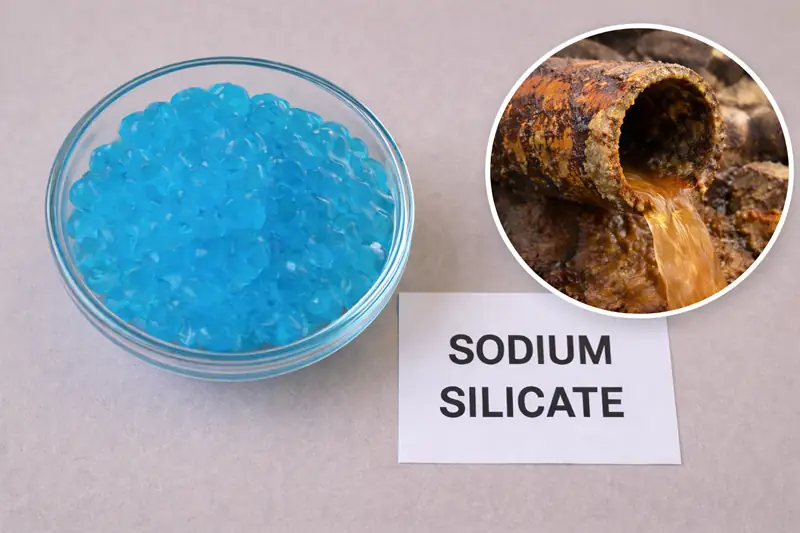
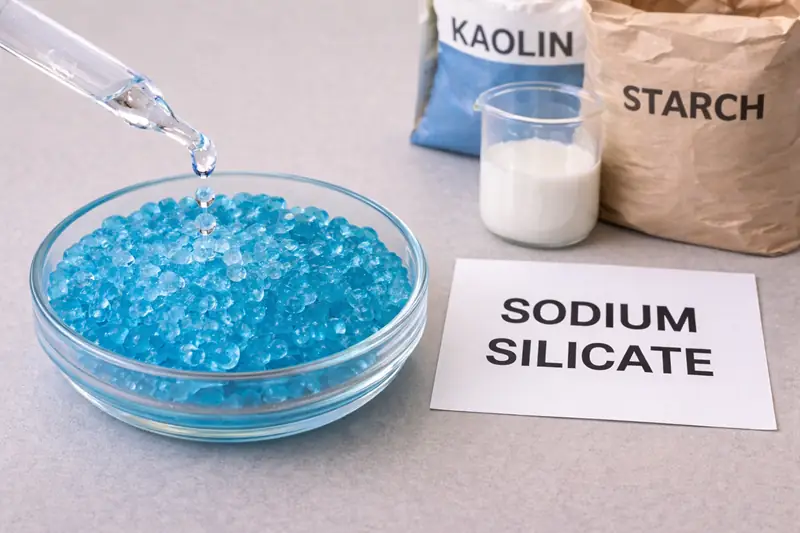
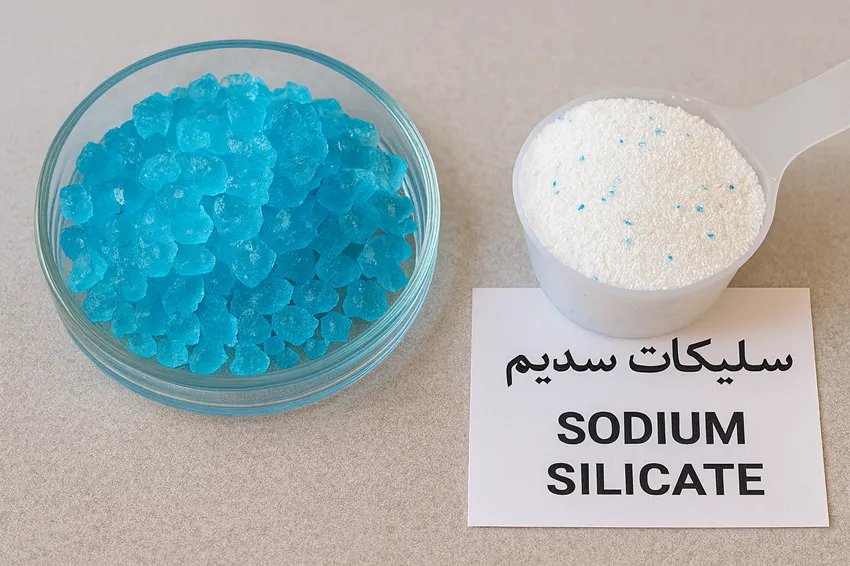
Sodium silicate (Na₂SiO₃) is an alkaline, water-soluble compound that has long been used in the glass, paper, detergent, and ceramic industries. But over the last two decades, its role in construction chemicals and concrete/mortar admixtures has become much more prominent.
In construction applications, liquid sodium silicate is typically used, and it can:
·Be added as an admixture to concrete and mortar mixes.
·Be sprayed or rolled onto hardened concrete as a penetrating densifier / surface hardener.
·In some mix designs, be used to control permeability, reduce water absorption, and increase durability.
In Iran’s market, companies such as Bavand Chemical by producing and supplying various construction chemical products (including admixtures suitable for concrete and mortar)—have helped make these technologies more accessible to contractors and engineers.
Today, it’s no longer only “28-day strength” that matters. Long-term durability, structural waterproofing, and reducing future repair costs have become the main concerns for employers and owners.
In this environment, sodium silicate in construction (cement, concrete, and mortar) is recognized as one of the tools for:
·Reducing permeability
·Increasing hardness and abrasion resistance
·Reducing surface dusting on concrete
Clients and operators are more sensitive than ever to:
·Lowering repair and renovation costs
·Extending service life
·Reducing the penetration of water, moisture, and salts into concrete and mortar
·Easier maintenance of industrial floors, parking areas, and warehouses
If you put these needs together, you’ll see that sodium silicate—along with other complementary materials—can be part of the solution, as long as you buy a high-quality product with a technical datasheet from reputable suppliers (such as Bavand Chemical or other specialized brands).
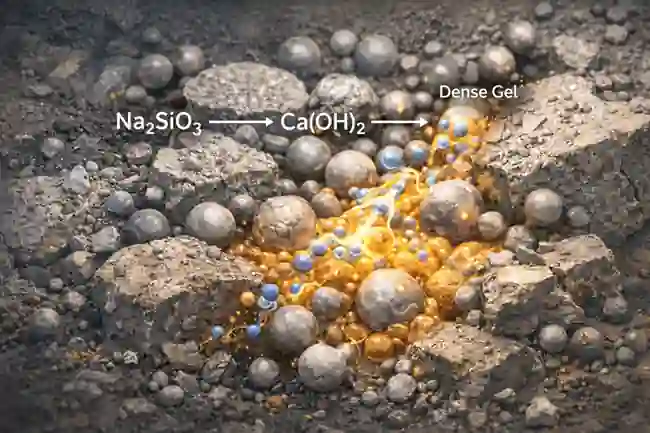
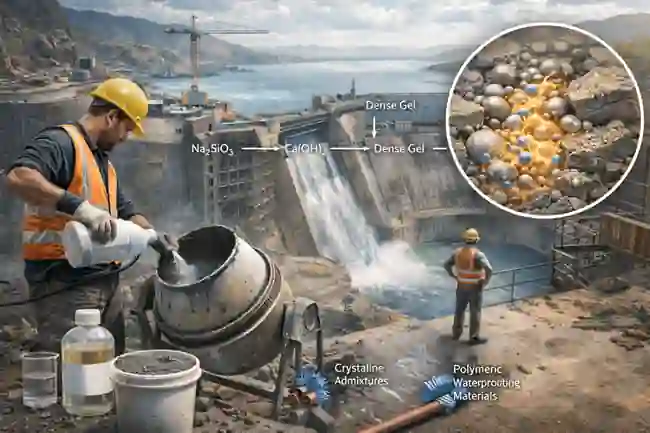
When sodium silicate solution enters the cement/concrete system, it reacts with calcium hydroxide (Ca(OH)₂)—a byproduct of cement hydration—and forms compounds similar to C-S-H gel (the main product responsible for cement hardening). The results of this process include:
·Filling part of the pores and micro-voids in the cement paste
·Increasing the surface density of concrete or mortar
·Reducing permeability to water and some ions
·Increasing abrasion resistance in floor concrete
Simply put:
Sodium silicate helps concrete become “denser,” “less permeable,” and—at the surface—“harder,” provided it is designed and used correctly.
·At reasonable dosages, it can slightly improve early strength.
·At excessive or uncontrolled dosages, it may reduce workability and can even negatively affect compressive strength.
So it should be viewed as a technical tool, not a magical liquid that automatically fixes everything.
Some of the most important benefits include:
·Reduced permeability and water absorption in mortars and concretes (especially façade and flooring mortars).
·Increased surface hardness and abrasion resistance—particularly for warehouse floors, parking decks, and storage areas.
·Reduced dusting on concrete surfaces in industrial floors and workshops.
·Helping fill surface pores and creating a denser surface.
·A relatively economical waterproofing/hardening option compared with many polymeric or resin materials.
Alongside the benefits, using sodium silicate without proper understanding can create issues:
· Reduced workability of concrete or mortar if overdosed.
· Potential increase in shrinkage cracking if the mix design is incorrect.
· If used improperly, possible reduction in compressive strength.
· Need for precise control of water-to-cement ratio and curing conditions.
· Possible surface staining if applied poorly as a penetrating densifier/surface hardener.
Conclusion: Sodium silicate is not “magic.” It’s a technical tool that requires proper design, testing, and engineering supervision.
Admixture in special cement production
· To improve certain durability properties and reduce permeability.
· In combination with other pozzolanic and mineral materials for high-performance cements.
Improving cement behavior in aggressive environments
· As part of systems designed for sulfate resistance and mildly acidic environments.
(Suggested image in the original text: a simple diagram of cement particles reacting with sodium silicate and forming a denser gel.)
Industrial floors and parking structures
Applying penetrating sodium silicate (a “densifier”) on hardened floor concrete can lead to:
· Higher abrasion resistance
·Reduced surface dusting
· Longer service life
This is common for industrial halls, cold stores, multi-story parking, and warehouses. Many contractors consult the technical teams of companies like Bavand Chemical to select the right product considering environment, traffic, slab thickness, and curing method.
Concrete exposed to moisture and water
In some mix designs, sodium silicate is used as part of a concrete waterproofing system—usually together with:
·Penetrating crystalline admixtures
·Polymeric waterproofing materials
·Correct detailing (joints, waterstops, drains, etc.)
·Façade mortars: to reduce water absorption, reduce staining susceptibility, and increase durability against rain and humidity.
· Jointing/grout mortars: to prevent water penetration through joints, especially in wet areas and brick façades.
·Repair mortars: to help reduce permeability and improve bonding in some repair systems, alongside polymer bonding agents.
|
Feature / Material Type |
Sodium Silicate |
Penetrating Crystalline Admixtures |
Polymeric Materials (bonding agents, emulsions) |
|
Mechanism |
Reacts with Ca(OH)₂ and forms a densifying gel inside pores |
Forms insoluble crystals inside concrete pores |
Forms a polymer film and increases bonding |
|
Best use |
Surface densifier/hardener, permeability reduction, industrial floors |
Structural waterproofing in mass concrete, tanks, foundations |
Increased mortar adhesion, repairs, thin finishes |
|
Relative cost |
Usually low to medium |
Usually medium to high |
Varies; often higher than sodium silicate |
|
Abrasion resistance |
Very good in surface floor applications |
Average; focus is waterproofing |
Average; focus is flexibility and adhesion |
|
Execution complexity |
Medium; needs clean surface and correct saturation condition |
Relatively high; needs precise mix design and curing |
Medium; relatively simple in mortars and slurries |
|
Suitable for quick repairs? |
More for surface rehabilitation |
More for new projects or deep repairs |
Yes—especially in repair mortars and bonding systems |
|
Dosage sensitivity |
High; overdosing can harm strength |
High; too little has limited effect; too much may cause cracking |
Medium; larger safety margin |
Imagine a 3,000 m² industrial hall. The floor concrete is old; workers constantly complain about concrete dust; forklifts cause tire marks and severe wear; and the client wants a solution that:
·Is cheaper than installing a new floor
·Doesn’t stop the factory line for a long time
·Provides acceptable durability for the next 10–15 years
In a real project, instead of full demolition, the contractor used this approach:
1.Grinding the concrete surface and removing the weak layer and contaminants.
2. Applying penetrating sodium silicate on the concrete surface in multiple stages with controlled saturation.
3.Early curing and preventing rapid drying.
4.Applying a thin protective sealer coat in high-traffic zones.
Reported outcome:
·Significant reduction in surface dusting
·Noticeable increase in surface hardness in simple hammer tests
·Reduced need for localized repairs in the following years
In similar projects, contractors typically consult the technical unit of a reputable manufacturer (e.g., Bavand Chemical) to choose the type of silicate, solids content, consumption per m², and execution details suitable for the jobsite.
Important note: The numbers below are only for general familiarity. Final design must follow national standards, manufacturer recommendations, and lab test results.
·Commonly evaluated around ~1 to 5% by weight of cement (for liquid sodium silicate).
·Within an optimal range, strength and durability may improve, but exceeding the optimum can reduce strength and increase porosity.
Professional suggestion (before large-scale use):
· Make trial mixes with different dosages.
·Check compressive strength, water absorption, workability, and cracking at different ages.
·Consult a reputable concrete lab and, if possible, the supplier’s technical unit.
For penetrating sodium silicate densifiers, manufacturers typically specify precisely:
·Consumption (liters per m²)
·Number of coats
·Surface condition (dry, SSD, new, or old concrete)
Execution suggestions:
·Clean the surface thoroughly (free of oil, dust, and old coatings).
Bring the concrete to SSD condition (saturated surface-dry: saturated but with no free water).
·Apply according to the manufacturer’s instructions using spray or roller.
·Prevent pooling in depressions.
Many newer sodium silicate products for concrete floors are solvent-free and VOC-free and comply with stricter environmental regulations. However, liquid sodium silicate is an alkaline solution, so:
·Use suitable gloves, goggles, and a mask.
·Avoid direct contact with skin and eyes.
·In case of contact, wash immediately with plenty of water.
Professional view: “Correct use of admixtures not only improves concrete performance, but by increasing service life, it also reduces the environmental impacts associated with repairs and demolition.” (Bavand)
Sodium silicate in construction (cement, concrete, and mortar) is often economically attractive in these scenarios:
·Projects with limited budgets that still need a durable, low-dust floor
·Factories/warehouses that cannot afford long production downtime
·Clients looking for a mid-priced solution between ordinary concrete and very expensive resin systems
On the other hand, if a project:
·Is exposed to highly corrosive chemicals, or
· Requires very strict industrial/food standards,
then sodium silicate may need to be used alongside specialized coating systems (epoxy, polyurethane, PU-cement, etc.), not alone.
In one sentence:
Sodium silicate in construction (cement, concrete, and mortar) is a powerful admixture and penetrant that can reduce permeability, increase hardness and durability, and lower repair costs—but only when it is properly designed, dosed, and executed.
For smart use:
·Define your goal clearly: waterproofing, surface hardening, dust reduction, or a combination?
·Consult the lab and manufacturer: use test data instead of guessing.
·Take mix design and manufacturer instructions seriously: overdosing can reverse the result.
·Think about the jobsite workflow: worker training, execution supervision, and safety matter.
If you’ve read this far, you are probably either:
·about to work on a project where concrete/mortar faces moisture, abrasion, and water ingress; or
·comparing options to reduce repair costs and increase durability.
Suggested action: Write a short list of current or upcoming projects where sodium silicate might be used. For each project, answer three simple questions:
1.What is my main goal? (waterproofing, surface hardening, durability, dust reduction)
2.What time and budget limitations do I have?
3.Can I do a trial application before the final decision?
If you need a product and technical consultation, you can request quotes from Bavand Chemical, review the product datasheet, and select the best option based on your project conditions.
Finally: Have you used sodium silicate in construction (cement, concrete, and mortar) before? Was your experience positive, or did you face challenges? Write your opinion below—these experiences are what keep this content alive, up-to-date, and truly practical.