
If a single solution could increase the strength of mineral coatings, provide a stable alkaline environment to protect metals and concrete, and also help reinforce plant cell walls what would it be? The answer: liquid potassium silicate. This time-tested yet up-to-date material proves itself wherever stability, adhesion, and resistance matter—from paint and resin lines to greenhouses and concrete jobsites. In this comprehensive article, written in plain but precise language, we move from structure and technical specifications to application methods, dosing, safety, differences, and even a practical scenario so you can choose and use liquid potassium silicate with confidence and optimal results.
In the Iranian market, specialized suppliers such as Bavand Chemical simplify selection and implementation for various industries by offering diverse grades and technical consulting.
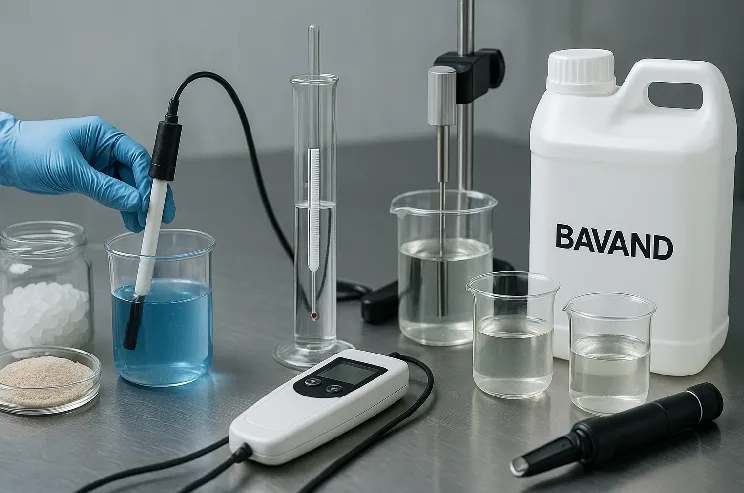
Liquid Potassium Silicate is an alkaline solution of SiO₂ and K₂O, commonly characterized by its modulus (SiO₂:K₂O ratio). This modulus and the total solids percentage determine chemical behavior, viscosity, and the rate of forming the silicate network. In practice, multiple grades are offered for compatibility with silicate paints, mineral primers, adhesives, concrete, refractories, and agricultural uses.
·Typical pH: Highly alkaline (e.g., ~11–12.5)
·Approximate density: Depends on total solids (e.g., ~1.2 to 1.4 g/cm³)
·Modulus range: Generally offered from low- to high-modulus grades to control network formation
Why it matters: Upon drying, liquid potassium silicate forms a silica gel/silicate network that acts as a mineral binder, increases adhesion, and reduces permeability. In agriculture, it can supply plant-available silicon and potassium.
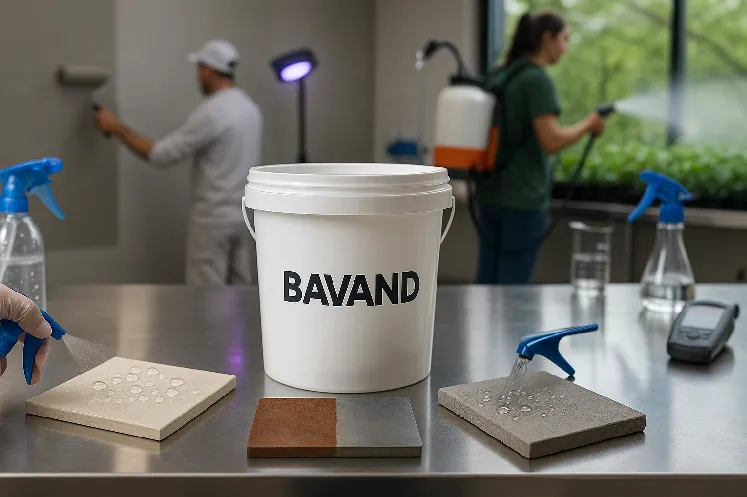
·Higher adhesion and durability in mineral coatings (H2 Bonding & Durability)
·Improved resistance to moisture and UV in suitable formulations
·Often more plant-friendly than sodium silicate in many agricultural scenarios
·Better concrete and mortar performance through formation of stable silicate phases
·Corrosion-inhibiting role in appropriately alkaline environments
·Cost-effective for projects where service life and TCO matter
Expert quote: “In mineral systems, your choice of modulus and total solids in liquid potassium silicate determines how quickly you achieve a dense, durable network.” — Senior Formulator of Mineral Coatings
Reminder: The figures below are common examples; exact specifications depend on grade and manufacturer. Always check the TDS/SDS for your target grade. In Iran, you can request up-to-date files from Bavand Chemical (as one available option in the market) before purchase.
|
Property |
Example Range/Status |
Impact on Performance |
|
pH (25 °C) |
11.0 – 12.5 |
High alkalinity; PPE requirements & tank compatibility |
|
Total Solids |
~20% – 40% |
Binder strength/viscosity; network formation rate |
|
Modulus (SiO₂:K₂O) |
Low to high modulus |
Adhesion, film hardness, chemical resistance |
|
Density (g/cm³) |
~1.20 – 1.40 |
Weight/volume dosing in production |
|
Viscosity |
Grade-dependent |
Pumpability and mixing uniformity |
|
Color |
Colorless to pale amber |
Depends on final formulation |
|
Index/Aspect |
Liquid Potassium Silicate |
Liquid Sodium Silicate |
|
Form |
Ready-to-use solution |
Alkaline solution |
|
Plant compatibility |
Often better in many cases |
May have limitations |
|
Coating uses |
Mineral binder, silicate primers |
Common, but different properties |
|
Transport |
Easy, but contains water weight |
Easier than solid |
|
Formulation control |
High (selectable modulus/solids) |
High |
|
Overall cost |
Project-dependent |
Sometimes more economical |
|
Industry |
RATIO |
Use Cases |
|
Welding electrode manufacturing |
2.1 |
Also used in liquid formulations to bond electrode coatings. |
|
Agrochemical production |
2.1 |
Raising soil alkalinity; leaf surface protection against pests. |
|
Foundry |
– |
Binder in sand molds (CO₂-Set & No-Bake); cleaner surfaces, better collapse control, reduced scrap and odor. |
|
Metal & architectural coatings |
– |
Clear, durable coatings on metal, concrete, brick, and decorative plaster; preserves pigment characteristics. |
|
Waterborne mineral paint |
– |
Blends with zinc powder to protect steel structures and bridges. |
|
Silica gel |
– |
Base medium for synthesizing and preparing silica gels. |
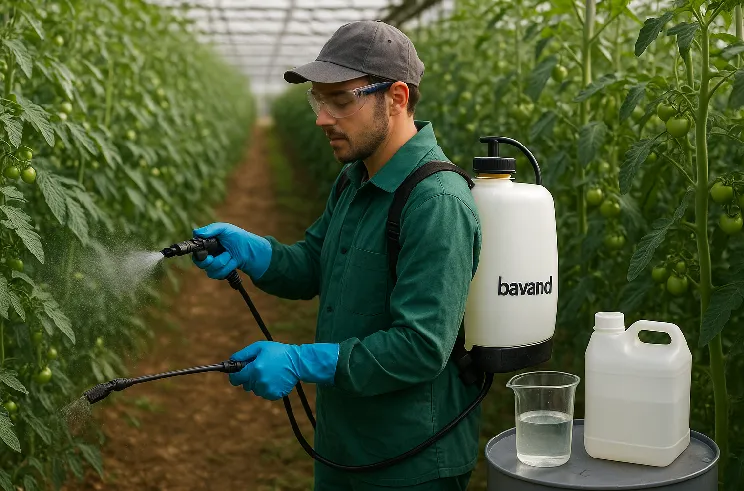
Liquid potassium silicate can provide plant-available silicon and potassium. Silicon supports cell-wall strengthening and is associated—across many crops (rice, wheat, vegetables, orchards)—with improved tissue firmness, reduced biotic/abiotic stress, and better standability. Potassium is vital for osmotic balance and crop quality.
·Foliar: After proper dilution (e.g., 1–3 mL/L as an example), use with low-hardness water.
·Fertigation (drip): Mind pH and tank compatibility; avoid direct mixing with concentrated calcium/magnesium solutions.
·Caution: Sensitive leaves may react to alkalinity—always run a small-scale test before broad application.
Storytelling: In a tomato greenhouse, the technical team first ran a spot test on 20 plants. After confirming no burn, they started with a low concentration. Over time, they reported stronger plant standability and improved fruit skin quality. They emphasized: “Success came more from cautious dosing and tank compatibility than merely choosing the product.”
To obtain suitable grades and mixing guidance, you can coordinate with the sales and technical units at Bavand Chemical to receive samples and relevant datasheets.
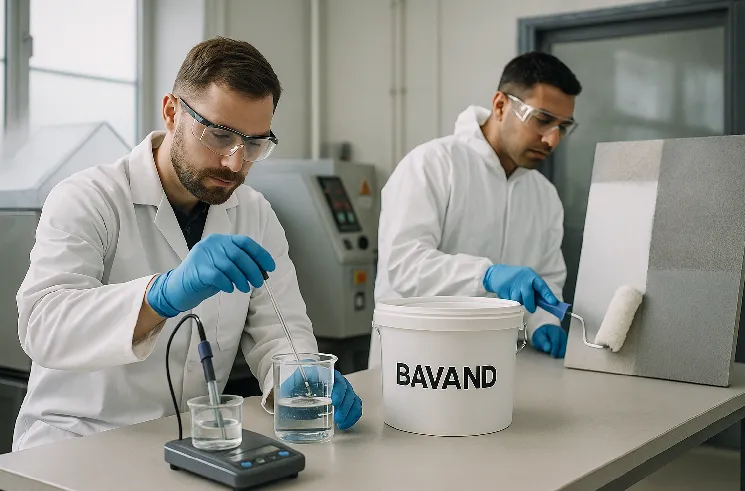
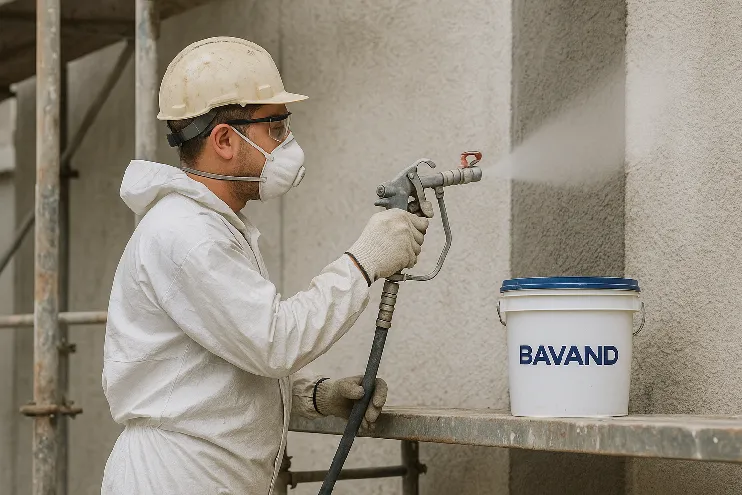
In mineral systems, liquid potassium silicate serves as a mineral binder that boosts adhesion to mineral substrates and enhances chemical/weather resistance. In silicate primers and façade paints, selecting the correct modulus determines hardness, breathability, and durability. In mineral anticorrosive primers, a stable alkaline environment can also help inhibit the onset of corrosion.
If you are in the formulation stage, accessing several grades from a domestic supplier such as Bavand Chemical enables A/B testing on total solids and modulus to reach the optimal adhesion/flexibility balance.
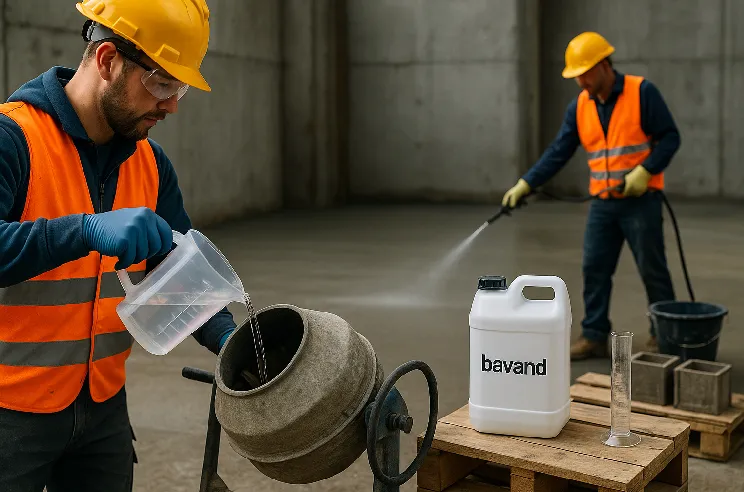
Smart additions of liquid potassium silicate to building materials can, via silicate reactions, reduce surface permeability and—in some scenarios—improve resistance to carbonation/freeze-thaw cycles. Surface-curing use is also common—but dose and timing are critical.
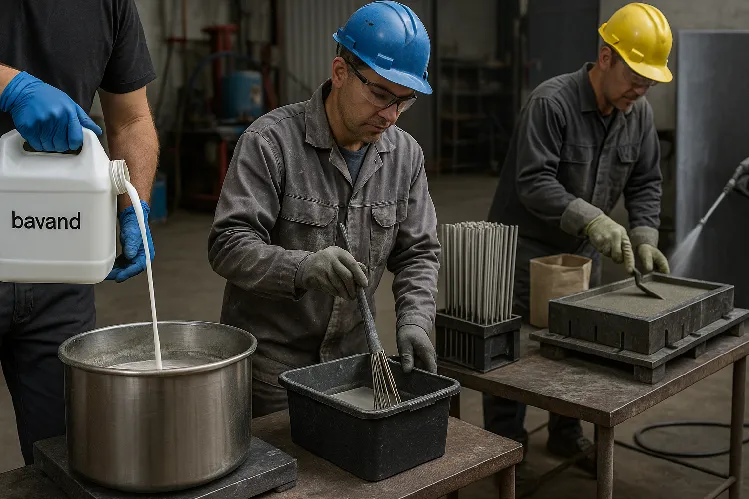
In mineral adhesives/agglomerants, electrode manufacturing/welding, refractories, and even some industrial cleaning formulations, liquid potassium silicate offers advantages thanks to alkaline stability and its ability to form a silicate network.
Step-by-step:
1.Define the goal: agriculture, coatings, concrete, etc.
2.Select the right grade: check modulus, total solids, and TDS/SDS.
3.Test tank compatibility:
o Prefer low-hardness or deionized water.
o Avoid direct mixing with concentrated Ca/Mg solutions.
4.Start low on dosing: small-area test/patch test first.
5.Measure pH and viscosity: especially in coatings and mortar systems.
6.Follow safety: alkali-resistant gloves, goggles, apron; immediate wash-down in case of skin/eye contact.
7.Storage: sealed container, away from acids and direct sun; FIFO for quality consistency.
Agronomy tip: For foliar use of liquid potassium silicate, timing (e.g., cooler hours) and droplet size matter; larger droplets on some surfaces increase the risk of alkaline spotting/burn.
Warning: These are not universal protocols. Always follow the manufacturer’s label, local advice, and your own small-scale testing.
·Foliar (vegetables/greens): 1–3 mL/L in low-hardness water; 10–14-day intervals; pause under intense heat/light.
·Fertigation: Low, continuous additions (ppm of K and Si per your feeding plan), with pH/EC monitoring.
·Silicate primer: Weight-% in formulation calibrated to total solids/modulus.
·Concrete/mortar: As an additive or surface treatment according to the grade’s technical instructions.
·Certificates & TDS/SDS: up-to-date datasheets, traceability, production date. (In Iran, ask Bavand Chemical to send the latest TDS/SDS for fast access.)
·Modulus & total solids: match project requirements.
·Control of interfering ions: more critical in agricultural use.
·Packaging compatibility: alkali-resistant HDPE/PP; compatible valves/pumps.
·Technical support: formulation/dosing support availability.
·Real cost (TCO): freight (water weight), consumption rate, durability/defect rate.
·Small-scale trial: in your own line/greenhouse before bulk purchase.
Suggested internal links:
·“Comprehensive Guide to Solid Potassium Silicate”
·“Sodium vs. Potassium Silicate: A Comparison”
·“PPE Guide for Alkaline Materials”
·“Silicate Primers for Facades”
·“About Bavand Chemical & Products”
A façade-paint manufacturer redesigned its formula with a low-modulus liquid potassium silicate to boost adhesion on mineral substrates and reduce blistering under high humidity. What led to success?
·Step 1: Select a higher-total-solids grade to improve network formation.
·Step 2: Tune pH and drying time to prevent surface cracking.
·Step 3: Use a compatible silicate primer for uniform absorption.
·Result: A harder film, better substrate adhesion, and more stable performance in in-house salt-spray/humidity tests.
The above data is a practical example of an optimization process; exact numbers will vary by grade/substrate/test conditions. For reproducible results, procure multiple grades from a stable source such as Bavand Chemical and run A/B comparisons.
·Mixing with hard water/concentrated calcium solutions → turbidity/precipitation
·Overdosing in foliar applications → risk of alkaline burn
·Ignoring final pH in the formulation → reduced stability/compatibility
·Skipping initial trials → risk of line shutdown or crop damage
·Using unsuitable containers → leaks/reactions with tank walls
Liquid potassium silicate bridges material science and real-world practice: as a durable mineral binder in coatings; as a contributor to stable silicate structures in concrete; and, in agriculture, as a source of silicon/potassium that can improve tissue strength and crop quality—provided you choose the right grade, dose correctly, and take tank compatibility seriously. With a disciplined purchasing checklist, initial trials, and professional safety, you can unlock its full value. To streamline sourcing and implementation, Bavand Chemical, as a domestic supplier, can be a suitable option for obtaining samples, datasheets, and initial technical consultation.
Need help? Send us your project specs and target grade, and we’ll provide a tailored technical recommendation + starting dose within one business day.